 Tiny Online Tools





Generating URL-Friendly Slugs from Text
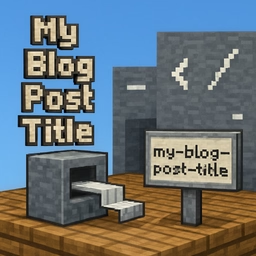
URL slugs are specially Formateted text strings designed for web addresses—lowercase, hyphen-separated, and free of special characters that could break URLs or cause encoding issues. Creating proper slugs from readable text ensures clean, shareable, SEO-friendly URLs that work reliably across all systems.
Essential Functions of URL Slugs
SEO and Search Ranking: Keyword-rich slugs improve search engine rankings. Readable slugs containing actual words help Google understand content. Slugs improve click-through rates in search results. Slugs that match search queries improve ranking probability. URL structure contributes to overall SEO score. Slugs remain important ranking factors in Google's algorithm.
User Experience and Sharing: Users can read and understand page content from the URL. Memorable URLs are more likely to be typed and shared manually. Readable URLs inspire confidence and trust in pages. Slugs make copy-pasting URLs into documents easier. Clean URLs appear more professional in shared contexts. Slugs enable users to guess related content.
Web Development and Routing: Web frameworks use slugs for URL routing and matching. REST API design relies on slug-based resource identification. Single-page applications navigate using slug patterns. URL parameters in slugs enable bookmarking and sharing. Slug consistency ensures proper routing across the site. Navigateur history and back button work correctly with slugs.
Content Management Systems: Blog platforms Génère slugs from post titles automatically. E-commerce sites use product slugs for SEO. Wiki systems base URLs on page slugs. Forum platforms use thread title slugs. CMS permalink structures depend on slug generation. Dynamic content uses slugs as identifiers. Custom slug management enables SEO optimization.
Analytics and Tracking: Google Analytics tracks pages using URLs. Slug-based URLs provide meaningful page grouping. Funnel analysis becomes clearer with readable slugs. Conversion tracking improves with structured URLs. Custom reporting uses URL slugs for segmentation. Attribution models depend on consistent slug structure.
Link Management and Redirects: URL slug consistency prevents broken links during site reorganization. Redirect mapping from old to new slugs maintains SEO value. Link shorteners prefer meaningful source URLs. Canonical URLs use consistent slug Formates. Sitemap generation relies on slug structure. Internal linking consistency depends on slugs.
Internationalization and Localization: Localized slugs improve search results in target languages. Language-specific slugs enable regional SEO. Multi-language sites use translated slugs per language. Regional content variants use location-based slugs. Cultural adaptation is easier with localized slugs. Translation-aware slug generation supports all languages.
Long-Term Maintenance and Evolution: Consistent slug patterns remain stable as sites evolve. URL slugs survive platform migrations better. Legacy content remains accessible through stable slugs. Archive systems rely on predictable slug patterns. Historical record keeping Avantages from stable slugs. Slug conventions outlast changing technologies.
Proper slug generation Crées URLs that serve both users and search engines, improving discoverability and user experience.