 Tiny Online Tools




Pixel-Free Noise & Grain Textures
SVG comes with a built-in noise generator via the <feTurbulence> filter. This tool gives you a visual interface to tune every parameter and output a clean, standalone SVG file ready to use as an overlay or background texture.
Two Noise Types
- fractalNoise — stacks turbulence octaves for a soft, cloudy pattern. Great for organic grain and paper-like textures.
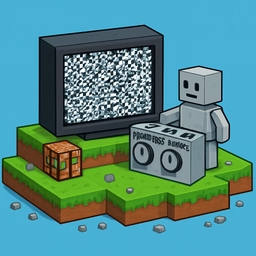
- turbulence — raw, higher-contrast noise that feels more like static or TV snow. Good for glitchy effects.
Controls
- Base frequency — how fine the noise is. Small values give large, soft blotches; large values give tiny speckles.
- Octaves — how many noise layers are summed. More octaves = more detail and more visual richness.
- Seed — integer for reproducibility. Same seed always produces the exact same noise pattern.
- Monochrome / Colored — monochrome multiplies all channels by your chosen color; colored keeps the native RGB noise.
- Foreground, Background, Opacity — tune how the noise sits on top of its own background rect.
Uses
- Grain overlays on hero images
- Retro TV / VHS-style glitch effects
- Paper / canvas-like backgrounds for UI cards
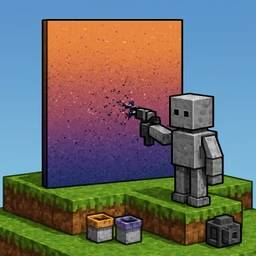
- Film-grain atop color gradients (combine with the Grainy Gradient tool)
- Visual noise for design systems
SVG keeps it sharp at any size, and browsers rasterize the noise per-pixel at display time — no tiling seams, no blurry scaling. Paste into your HTML or CSS background-image: url(...) with a data URI for the tiniest possible footprint.