 Tiny Online Tools





HTML formatting is useful when markup is technically valid but hard for humans to read
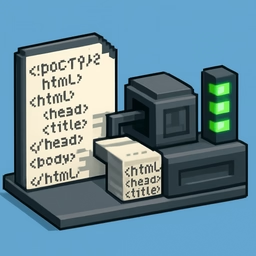
HTML often starts out clear and then becomes messy after minification, template generation or repeated edits. A formatter helps turn that markup back into something readable by restoring indentation, line breaks and consistent structure. That matters when you are debugging layout issues, reviewing generated output or trying to understand unfamiliar markup from another project. A clean document is not just nicer to look at, it is easier to reason about and safer to edit.
Why the formatting options matter
Indent size and newline preservation can make a real difference depending on the kind of HTML you are working with. Some teams prefer two spaces, while others use four. Some files benefit from keeping existing blank lines because those breaks were intentionally used to separate sections. The point of a formatter is not only to make code pretty, but to make it easier to navigate and review without erasing the structure that already helps humans understand the file.
Practical workflow
Paste minified or untidy HTML into the editor, choose your indentation style and decide whether to preserve existing newlines. The formatted output then becomes much easier to scan, copy into documentation or use as the basis for debugging and refactoring. This is especially handy for templated markup, email HTML and generated fragments that are difficult to read in their raw state. Because everything runs locally in the browser, you can clean up private markup without uploading it anywhere. For front-end developers, QA teams and technical writers, an HTML formatter is a small tool that pays off every time you need readable markup fast.