 Tiny Online Tools


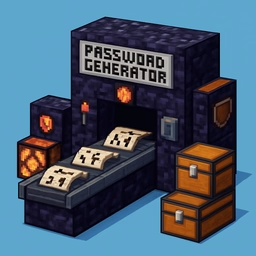


Passphrase Generator
Random characters are hard to remember, leading people to reuse weak passwords or write them down—both security problems. Passphrases solve this by combining common words into memorable sequences. A passphrase like apple-river-thunder-crystal is far easier to remember than K#mQ$7xL2p@9, yet equally or more secure due to higher entropy from multiple words.
Memorable security
Passphrases rely on words being easy to remember while still providing tremendous entropy. Four random words from a large word list have about 44 bits of entropy (2^44 possible combinations), which is far more than most people can achieve with random characters they try to remember. Five words jump to 55 bits, exceeding the entropy of typical eight-character random passwords.
Word list quality
This tool uses a curated word list of common English words that are easy to spell and pronounce. Words are selected to avoid confusion (no homophones) and maintain good memorability. The randomness comes from cryptographically secure selection—each word is chosen independently from the full list.
Separator options
Choose how words connect: spaces (traditional and readable), dashes (common in URL-based contexts), dots (technical appearance), or underscores (often required by systems restricting special characters). Separators don't significantly affect security but affect usability in different contexts.
Word count flexibility
Three words provide solid security for most use cases. Four words is better; five words or more provides exceptional security. The tool supports 3 to 8 words, giving you control over the security/memorability tradeoff. More words mean more security but potentially harder to remember (though still easier than random characters).
Capitalization option
Capitalizing the first letter of each word makes passphrases look more formal and can help meet password requirements that demand uppercase letters. It also slightly improves memorability through structure.
NIST and EFF recommendations
Password experts, including NIST, increasingly recommend passphrases over random passwords for human-memorable credentials. Passphrases offer better security-to-memorability ratios and are becoming standard practice.