 Tiny Online Tools



Converting Text to PascalCase Format
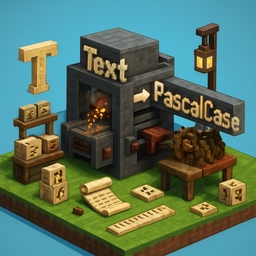
PascalCase, also called UpperCamelCase, capitalizes the first letter of every word without using separators. This naming convention is standard in many programming languages for class names, types, and constructors. Converting text to PascalCase ensures compatibility with language conventions and object-oriented programming standards.
Essential Applications for PascalCase Conversion
Object-Oriented Programming: Class names in Java use PascalCase. C# convention mandates PascalCase for classes. TypeScript interfaces and types use PascalCase. Python class definitions follow PascalCase convention. C++ class names traditionally use PascalCase. Go exported identifiers use PascalCase. Objective-C class names use PascalCase.
Framework and Library Development: React component names must use PascalCase. Angular component classes use PascalCase. Vue single-file component names use PascalCase. Next.js page components use PascalCase names. GraphQL type definitions use PascalCase. Protocol Buffers message types use PascalCase.
Type Definitions and Interfaces: TypeScript interfaces use PascalCase naming. Generic type parameters often use PascalCase. Protocol definitions in Swift use PascalCase. Enum definitions use PascalCase in most languages. Data class definitions use PascalCase. Abstract base classes use PascalCase naming.
API and Schema Design: GraphQL schema types use PascalCase. Protocol Buffer message definitions use PascalCase. OpenAPI schema objects use PascalCase. JSON Schema definitions use PascalCase for types. REST API response object names use PascalCase. SOAP services use PascalCase for object types.
Namespace and Module Organization: .NET namespace names use PascalCase. Java package class names use PascalCase. Python module class exports use PascalCase. Ruby module and class names use PascalCase. Go package types use PascalCase. Rust struct names use PascalCase.
Code Generation and Scaffolding: Automatic code generation produces PascalCase class names. Model generators create PascalCase types. ORM class generation uses PascalCase. API client generators create PascalCase models. Mock generation tools produce PascalCase classes. Boilerplate generators use PascalCase.
Linting and Code Quality: ESLint rules enforce PascalCase for class names. StyleLint configurations for PascalCase. SonarQube rules check PascalCase convention. Code formatters can enforce PascalCase. Static analysis tools verify PascalCase compliance. IDE refactoring tools ensure PascalCase conversion.
Documentation and Communication: Technical documentation uses PascalCase for class names. API documentation standardizes on PascalCase. Architecture diagrams use PascalCase for types. Code examples in guides use PascalCase. Textbook examples follow PascalCase conventions. Training materials standardize on PascalCase.
Converting to PascalCase ensures compliance with object-oriented programming conventions and maintains consistency across class-based code.