 Tiny Online Tools


Sharing WiFi Without Spelling Out Passwords
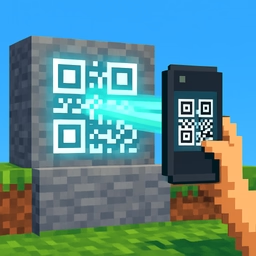
Guests arrive at your home or office and need WiFi access. Verbally spelling out a long, complex password is awkward and error-prone. The WiFi QR Generator transforms your network credentials into a scannable QR code. Guests scan once, and their phone automatically connects—no typing, no frustration, no security risk from visibly displayed passwords.
The Problem It Solves
Password Complexity and Length: Modern WiFi security requires strong passwords. "CorrectHorseBatteryStaple" is both secure and difficult to spell aloud. Writing it down defeats security by creating records. Scanning a QR code is simpler and more secure.
Spelling Confusion: Even simple passwords lead to confusion. Is that a capital O or zero? A lowercase l or number one? Spelling mistakes lock guests out and waste time troubleshooting.
Physical Display Risk: Writing WiFi credentials on a whiteboard or displaying them visibly creates security liability. Anyone in the vicinity can access your network. QR codes eliminate this—the code is meaningless without context.
Practical Applications
Hospitality: Hotels, Airbnb hosts, and bed-and-breakfasts display WiFi QR codes instead of passwords. Guests scan for instant access without asking staff or searching for credentials.
Offices and Coworking Spaces: Conference rooms display WiFi QR codes for visiting clients and partners. No need for IT staff to manually connect visitors or distribute credentials.
Cafes and Restaurants: Public WiFi with complex passwords is challenging for customers to connect to. A QR code on the wall or menu eliminates this barrier to access.
Home Sharing: Guests staying overnight can connect without bothering hosts. The QR code provides convenient access without recurring password requests.
Events: Conferences, trade shows, and festivals distribute WiFi QR codes to attendees. Rather than announcing the password repeatedly, one printed code provides universal access.
Security Considerations
WiFi QR codes still encode passwords, so physical security of the QR code image matters. However, they're more secure than passwords written on whiteboards or verbally shared. A printed QR code in a private space is more secure than posting credentials publicly.
The generator supports all common security standards:
- WPA/WPA2: Modern standard providing strong encryption
- WEP: Legacy standard (rarely used now, less secure)
- Open Networks: No authentication required
You can choose whether to hide the password in the QR code itself or display it separately for transparency.