 Tiny Online Tools

Make CIDR subnet math easier to inspect
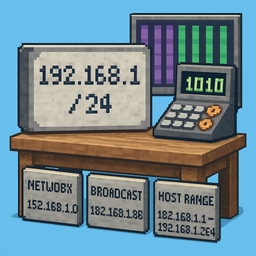
CIDR notation is concise, but a single suffix like /24 or /27 actually hides several values that matter for real network work. This calculator expands that notation into the network address, broadcast address, subnet mask and usable host count so you can sanity-check a plan without pulling out a spreadsheet or command-line tool. Because it runs in the browser, it is handy for quick checks during classes, lab work or infrastructure planning.
Why this matters
Subnetting mistakes are often small but expensive. A range that is one prefix length too wide can waste address space, while one that is too narrow can cut off hosts or make routing confusing. By comparing the derived network and broadcast addresses with the host count, you can catch those mistakes early and see whether the CIDR block actually matches the range you intend to use.
Practical workflow
Paste an IP and prefix, read the computed values, and compare them with your mental model or documentation. If you are planning a network, the output helps you confirm whether the block is large enough for the number of devices you expect. If you are studying subnetting, it gives you an immediate way to test examples and see how prefix length changes the usable range. That makes the notation much easier to trust and much easier to teach.