 Tiny Online Tools


Audio Format Converter
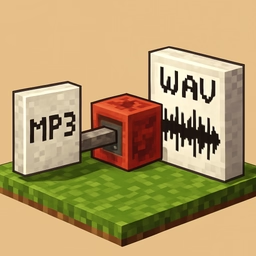
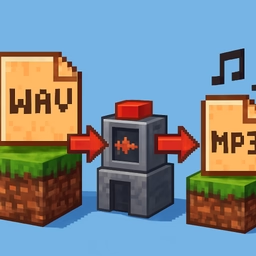
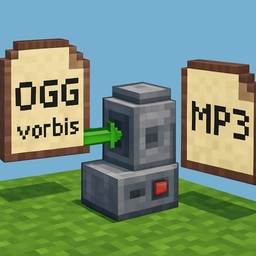
Audio files come in different formats, each with trade-offs between compatibility, quality, and file size. This converter handles the job of transforming compressed audio files (MP3, OGG, AAC, FLAC) into universally compatible WAV format, with full control over sample rate and stereo/mono output.
Format compatibility
Some audio software demands WAV format, certain production workflows require uncompressed audio, and some platforms need specific sample rates. Rather than hunting for separate tools for each format conversion, this single converter handles all major audio formats, letting you get any input into WAV format with your exact specifications.
Custom sample rate selection
Choose target sample rate from 8 kHz (telephone quality) up to 96 kHz (ultra-high fidelity). Professional audio production often uses 44.1 kHz (CD quality) or 48 kHz (video standard). Higher sample rates capture more detail but create larger files; lower rates reduce file size for applications where highest quality isn't critical. The tool shows output file size before conversion, so you understand the implications of your choice.
Mono or stereo
Convert stereo tracks to mono to cut file size in half (useful for voice recordings, podcasts, and archival), or maintain stereo for music and immersive audio. The choice depends on your use case—voice content often needs only mono, while music benefits from stereo's spatial information.
Preview before download
After conversion, preview the audio to confirm it sounds as expected. This prevents downloading and then discovering the sample rate or channel configuration didn't convert as intended.
Professional applications
Audio engineers use it to prepare source files for mastering, podcasters convert downloaded episodes to editing-friendly WAV format, musicians archive recordings in lossless WAV, software developers prepare audio assets for applications, and archivists convert formats for long-term preservation. Video editors need WAV audio for certain NLE systems.
Completely local processing
Conversion happens entirely in your browser using the Web Audio API. Your audio files never upload anywhere—all processing is instant, private, and controlled entirely by you.